
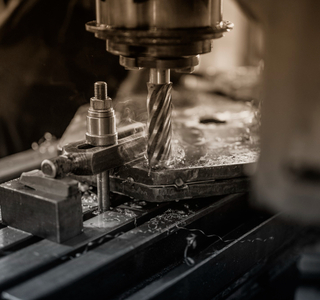
Precision cutting is evolving rapidly as manufacturers seek greater accuracy, faster production, lower waste, and improved consistency. In 2026, CNC manufacturing is increasingly shaped by artificial intelligence, advanced tooling, automation, digital twins, and smarter quality-control systems. These technologies are changing how components are designed, machined, inspected, and delivered.
Key Precision Cutting Trends Shaping Modern CNC Manufacturing
The latest technologies are making CNC machining more accurate, automated, efficient, and data-driven. From AI-powered processes to advanced tooling and digital twins, these trends are transforming how manufacturers approach precision cutting.
- AI-Powered Cutting and Process Optimization: Artificial intelligence is becoming one of the most important developments in modern machining. CNC systems can collect information such as spindle load, vibration, temperature, cutting conditions, and tool performance. AI and machine-learning systems can analyse this data to identify patterns and support better machining decisions. Instead of relying entirely on fixed cutting parameters, intelligent systems can help optimize feeds, speeds, and toolpaths according to changing machining conditions. This can improve consistency while reducing unnecessary tool wear and production interruptions. For manufacturers using CNC machining Sharjah, these developments can provide opportunities to improve productivity while maintaining the tight tolerances required for demanding components.
- Digital Twins for Virtual Machining: Digital twin technology is becoming increasingly important in precision manufacturing. A digital twin creates a virtual representation of a machine, process, or production environment and can connect real-world operating data with simulation and analysis. Before production begins, engineers can use digital simulations to examine toolpaths, cutting conditions, possible collisions, and process behavior. This helps identify potential problems before valuable material is placed on the machine. Digital twins are also moving beyond simple simulation. Modern systems can connect design, process planning, machining, and inspection data, creating a more continuous production workflow.
- High-Speed and Ultra-Precision Machining: High-speed machining continues to develop as manufacturers demand shorter cycle times without sacrificing dimensional accuracy. Improvements in spindle technology, machine structures, cutting tools, and process control allow manufacturers to remove material efficiently while controlling heat and vibration. Ultra-precision machining is particularly relevant for components requiring extremely small tolerances and excellent surface finishes. Current research is exploring areas such as temperature measurement in the cutting zone, advanced materials, high-speed spindle behavior, and edge computing for machine tools. These developments are especially valuable in aerospace, medical, electronics, automotive, and other industries where even minor dimensional variations can affect component performance.
- Smarter Cutting Tools and Tool Monitoring: Cutting tools are becoming more intelligent and application-specific. Modern tooling is designed to handle difficult materials, higher cutting speeds, and demanding surface-finish requirements. At the same time, tool-monitoring technologies can track factors such as vibration, cutting force, temperature, and tool condition. Predictive approaches can help identify tool wear before it causes poor surface quality or unexpected failure. This shift from replacing tools at fixed intervals toward condition-based monitoring can help manufacturers use tools more efficiently and reduce avoidable production interruptions.
- Automated CNC Production: Automation is another major trend influencing precision cutting. Robotic systems can increasingly support activities such as material loading, unloading, part handling, inspection, and machine tending. When CNC machines are integrated with automated handling systems, manufacturers can reduce repetitive manual work and maintain more consistent production cycles. Automation can also support extended or lights-out production where appropriate, although reliable monitoring and safety systems remain essential. For companies seeking scalable production, combining advanced CNC equipment with robotics can provide a more flexible manufacturing environment.
- Closed-Loop Quality Control: Quality inspection is becoming more closely connected to the machining process. Instead of inspecting a finished component and simply accepting or rejecting it, modern production systems can use measurement information to improve subsequent operations. Touch probes, machine vision, sensors, and coordinate measuring equipment can provide detailed information about component dimensions and surface conditions. This data can then support process adjustments and help identify the causes of recurring quality problems. The result is a shift toward continuous quality management rather than inspection being treated as a separate final-stage activity.
- Hybrid Manufacturing: Hybrid manufacturing combines different production technologies within a connected workflow. One emerging approach combines additive manufacturing with subtractive CNC machining. A component can be produced close to its final shape using an additive process and then accurately finished through machining. This approach can reduce material waste and make it easier to manufacture complex geometries. Hybrid systems can be particularly useful when components require both geometric freedom and highly accurate finished surfaces.
- Sustainable Precision Cutting: Sustainability is becoming another consideration in modern machining. Manufacturers are looking at ways to reduce material waste, energy consumption, coolant usage, and unnecessary machining time. Energy-efficient machine operation, optimized toolpaths, minimum-quantity lubrication, and better tool management are among the approaches being explored. Current manufacturing trends increasingly connect sustainability metrics with production performance rather than treating environmental efficiency as a separate concern. Reducing scrap is particularly valuable because it can lower both material costs and the environmental impact associated with producing replacement components.
- Edge Computing and Real-Time Machine Data: Precision cutting increasingly depends on fast access to machine data. Edge computing allows some data processing to happen close to the machine rather than sending every piece of information to a distant system. This can support faster responses to changes in vibration, temperature, spindle load, or other operating conditions. Research into precision machining is highlighting edge computing as one of the technologies that can contribute to more responsive machine tools.
What These Trends Mean for Manufacturers?
The latest developments show that precision cutting is moving from conventional automated machining toward connected, intelligent, and increasingly adaptive manufacturing. AI, digital twins, advanced tooling, automation, real-time monitoring, and hybrid processes are working together to improve productivity and quality.
For businesses looking for CNC machining Dubai, choosing a machining partner with modern equipment is only one part of the decision. It is also important to consider its process-control capabilities, inspection systems, tooling expertise, ability to handle complex materials, and approach to quality assurance.
The future of precision cutting is not simply about making CNC machines faster. It is about making the entire manufacturing process smarter. Technologies such as AI-driven optimization, digital twins, predictive tool monitoring, automation, closed-loop inspection, and sustainable machining are helping manufacturers achieve greater control over every stage of production. As these technologies continue to mature, manufacturers that adopt practical digital and precision-cutting solutions will be better positioned to produce complex components with consistent quality, shorter lead times, and improved resource efficiency.