
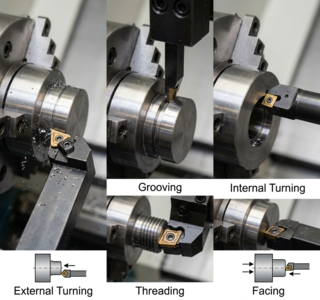
Modern manufacturing relies heavily on precision machining to produce high-quality components for different industries. One of the most important processes used in machining is CNC turning, where a rotating workpiece is shaped using specially designed cutting tools. The performance, accuracy, and efficiency of the machining process largely depend on the quality and selection of the tools being used. This is why understanding CNC turning tools is essential for manufacturers, machinists, and production engineers. These tools play a major role in improving productivity, maintaining dimensional accuracy, and delivering superior surface finishes. Proper tool selection also helps reduce machining time, minimize material waste, and extend tool life.
Introduction to CNC Turning Tools
CNC turning is a machining process in which a workpiece rotates while a stationary cutting tool removes material to create the desired shape. This process is commonly performed on CNC lathes and is widely used for manufacturing cylindrical components such as shafts, bushings, and threaded parts. Cutting tools are critical in CNC machining because they directly influence the speed, precision, and quality of the finished product. A properly selected turning tool ensures smooth operation, consistent performance, and reduced downtime. In high-volume manufacturing, the right tooling solution can significantly improve productivity and operational efficiency.
What are CNC Turning Tools?
CNC turning tools are specialized cutting instruments used in CNC lathes to remove material from rotating workpieces. Their primary purpose is to shape, cut, bore, groove, thread, and finish components according to precise specifications. Unlike some other cutting tools used in milling or drilling operations, turning tools are mainly designed for rotational machining processes. They are widely used across manufacturing industries including automotive, aerospace, medical equipment production, and heavy engineering.
Types of CNC Turning Tools
- External Turning Tools: External turning tools are used to reduce the outer diameter of a workpiece. They help create smooth cylindrical surfaces and are commonly used in industries that manufacture shafts, rods, and machine components.
- Internal Turning Tools: Internal turning tools are mainly used for boring operations. These tools enlarge or refine internal holes and help improve dimensional accuracy inside the workpiece.
- Facing Tools: Facing tools are designed to create flat and smooth surfaces at the end of a component. They are important in finishing operations where surface quality and dimensional consistency are critical.
- Thread Cutting Tools: Thread cutting tools are used for producing both internal and external threads. These tools ensure precision thread creation for bolts, nuts, fittings, and other threaded components.
- Grooving Tools: Grooving tools are used to create narrow channels or grooves on a workpiece. These grooves may serve functional purposes such as retaining rings, seals, or assembly features.
- Parting-Off Tools: Parting-off tools cut completed components away from the remaining material. They are highly important in mass production environments where efficient separation of parts is necessary.
- Knurling Tools: Knurling tools create textured patterns on metal surfaces to improve grip and handling. These patterns are commonly seen on tool handles, knobs, and industrial equipment.
Functions of CNC Turning Tools
Turning tools perform several important machining functions, including:
- Material removal
- Surface finishing
- Precision shaping
- Thread creation
- Hole enlargement
- Cutting and separation
Each function contributes to producing accurate and high-quality components for industrial applications.
Materials Used in CNC Turning Tools
Different materials are used in turning tools depending on machining requirements and workpiece materials.
- Carbide Tools: Carbide tools offer excellent hardness, wear resistance, and high-speed machining capability. They are widely preferred for demanding industrial applications.
- High-Speed Steel (HSS): HSS tools are known for their toughness and affordability. They are suitable for general machining operations and lower cutting speeds.
- Ceramic Tools: Ceramic tools provide excellent heat resistance and are commonly used for high-speed finishing applications.
- CBN and Diamond Tools: Cubic Boron Nitride (CBN) and diamond tools are used for extremely hard materials and precision finishing operations.
Each tool material offers unique advantages in terms of durability, cutting speed, and machining performance.
- Tool Holders and Inserts: Tool holders securely position the cutting tool during machining operations. Stable tool holding is essential for maintaining accuracy and reducing vibration.Replaceable inserts are commonly used in modern machining because they can be changed quickly without replacing the entire tool. Indexable inserts provide several advantages, including reduced tooling costs, improved efficiency, and faster production cycles.
Choosing the Right CNC Turning Tool
Selecting the correct turning tool depends on several important factors:
- Type of workpiece material
- Required cutting speed
- Tool geometry
- Production volume and machining requirements
Proper tool selection helps optimize machining efficiency and improve product quality.
CNC Turning Tool Geometry Explained
Tool geometry has a major influence on cutting performance and chip control.
- Rake Angle: The rake angle affects chip flow and cutting force during machining.
- Clearance Angle: The clearance angle prevents excessive friction between the tool and workpiece.
- Nose Radius: The nose radius influences surface finish and tool strength.
- Cutting Edge Design: The cutting edge design determines how efficiently material is removed during machining.
Understanding these geometric features helps improve machining precision and tool life.
Importance of Tool Coatings
Modern cutting tools often include protective coatings to enhance performance.
- TiN Coating: Titanium Nitride coatings improve hardness and reduce friction.
- TiAlN Coating: Titanium Aluminum Nitride coatings provide excellent heat resistance for high-speed machining.
These coatings improve wear resistance, reduce heat generation, and extend tool life during demanding operations.
Common Problems in CNC Turning Tools
Several issues can affect machining performance if tools are not properly maintained.
- Tool Wear: Continuous machining gradually reduces cutting efficiency and dimensional accuracy.
- Chipping: Improper cutting conditions may cause damage to the cutting edge.
- Built-Up Edge Formation: Material buildup on the cutting edge can negatively affect surface finish.
- Vibration and Chatter: Poor tool stability may lead to vibration, noise, and inaccurate machining.
Identifying and correcting these issues early helps maintain machining quality.
Maintenance Tips for CNC Turning Tools
Proper maintenance improves tool performance and extends operational life.
- Store tools properly to avoid damage
- Conduct regular inspections for wear and cracks
- Use correct cutting parameters
- Replace worn inserts on time
Preventive maintenance reduces downtime and improves production consistency.
Industries That Use CNC Turning Tools
Many industries depend on precision turning operations for manufacturing complex components.
- Automotive Industry: Used for engine parts, shafts, and transmission components.
- Aerospace Manufacturing: Essential for producing lightweight and high-precision aerospace components.
- Medical Equipment Production: Used for surgical instruments and precision medical devices.
- Oil and Gas Sector: Important for manufacturing valves, connectors, and drilling components.
These sectors rely heavily on advanced CNC Machining Tools for accurate and reliable production.
Advantages of Using High-Quality CNC Turning Tools
High-quality tooling solutions provide several operational benefits:
- Better machining accuracy
- Longer tool life
- Improved productivity
- Reduced machining costs
Reliable tooling also minimizes downtime and ensures consistent product quality.
Latest Trends in CNC Turning Technology
Modern machining technology continues to evolve rapidly.
- Smart Tooling Systems: Advanced sensors help monitor tool performance in real time.
- Automation in Machining: Automated systems improve efficiency and reduce manual intervention.
- Advanced Coatings and Materials: New coating technologies enhance durability and heat resistance.
- AI-Based Tool Monitoring: Artificial intelligence helps predict tool wear and optimize machining conditions.
These advancements are transforming modern manufacturing and improving operational efficiency with advanced CNC machining tools.
Selecting the correct turning tool is extremely important for achieving precision, productivity, and long-term machining performance. From external turning and boring to threading and grooving, every tool serves a specific purpose in the manufacturing process.
Proper tooling selection, maintenance, and modern technology integration help manufacturers improve machining efficiency, reduce operational costs, and maintain superior product quality. As industries continue to demand higher precision and faster production, advanced turning tools will remain essential in modern machining operations.