
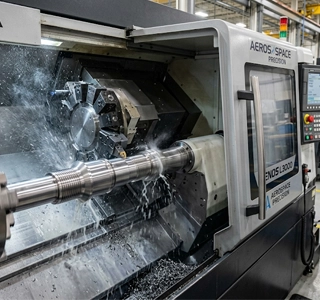
The aerospace industry operates in an environment where precision is not optional, it is essential. Every aircraft, satellite, helicopter, and defense system depends on components that must perform flawlessly under pressure, vibration, heat, and extreme environmental conditions. Even the smallest dimensional error can affect performance, safety, and reliability. That is why CNC turning has become one of the most trusted manufacturing processes for the aerospace sector.
CNC turning uses computer-controlled lathes to shape raw materials into exact cylindrical or rotational parts. It allows manufacturers to produce highly accurate components with consistent repeatability, making it ideal for aerospace applications. From engine shafts to hydraulic fittings, CNC turning plays a vital role in delivering dependable parts for critical systems. Companies involved in CNC machining aerospace parts understand that quality and precision are the foundation of every successful project.
Introduction to CNC Turning in Aerospace Manufacturing
CNC turning is a subtractive machining process where a work piece rotates while a cutting tool removes material to create the desired shape. In aerospace manufacturing, this process is widely used to produce round, symmetrical, and complex components that require close tolerances.
Modern CNC turning centers are equipped with advanced software, automatic tool changers, and multi-axis capabilities. This enables manufacturers to create detailed components efficiently while maintaining strict quality standards. As aerospace engineering becomes more advanced, CNC turning continues to evolve alongside it.
Why Precision Matters in Aerospace Components?
Precision is one of the most important requirements in aerospace production. Aircraft and spacecraft operate in demanding conditions, where every part must fit perfectly and function reliably. Components are often exposed to high temperatures, pressure fluctuations, and constant mechanical stress.
If a part is slightly oversized, undersized, or poorly finished, it may cause wear, vibration, leakage, or system failure. This is why aerospace manufacturers rely on CNC turning to achieve exact dimensions and consistent repeatability. Accuracy helps improve safety, extend service life, and reduce maintenance issues.
Common Aerospace Parts Produced by CNC Turning
CNC turning is used to manufacture a wide range of aerospace components, including:
- Shafts and spindles
- Bushings and sleeves
- Fasteners and threaded connectors
- Hydraulic fittings
- Bearing housings
- Landing gear pins
- Fuel system components
- Turbine collars and rings
These parts are used in aircraft engines, control systems, structural assemblies, and onboard equipment. Because many of them are mission-critical, they must meet extremely strict engineering standards.
Materials Used in Aerospace CNC Turning
The aerospace industry uses materials that combine strength, lightweight properties, and resistance to heat or corrosion. CNC turning machines must be capable of handling these advanced metals with care and accuracy. Common materials include:
- Titanium: Strong, lightweight, and corrosion-resistant
- Aluminum Alloys: Lightweight and ideal for structural parts
- Stainless Steel: Durable and resistant to harsh environments
- Inconel: Excellent for high-temperature engine applications
- Brass and Copper Alloys: Used for electrical and specialized fittings
Machining these materials requires the right tooling, speeds, cooling methods, and expertise to ensure perfect results.
Benefits of CNC Turning for Aerospace Industry
CNC turning offers several advantages that make it ideal for aerospace manufacturing.
- High Accuracy: Computer-controlled machining ensures consistent dimensions and repeatability across production runs.
- Faster Production: Automated systems reduce setup time and increase efficiency, especially for large batches.
- Reduced Material Waste: Precise cutting paths help optimize raw material use and lower waste.
- Reliable Quality: Every component can be produced to the same exact standard, reducing defects.
- Cost Efficiency over Time: Although precision manufacturing requires investment, fewer errors and less rework create long-term savings.
This is why many companies offering aerospace CNC machining services focus heavily on advanced turning capabilities.
Tight Tolerance Machining for Critical Applications
Aerospace parts often require tolerances measured in microns. Tight tolerances are essential for components such as bearings, rotating shafts, couplings, and sealing surfaces.
Even a tiny variation can affect alignment, movement, or pressure control. CNC turning machines use high-precision spindles, rigid tooling systems, and advanced programming to maintain these demanding tolerances. Manufacturers also perform in-process checks to ensure dimensions remain accurate throughout production.
Advanced CNC Machines Used in Aerospace Turning
Today’s aerospace machining facilities use highly sophisticated turning equipment designed for precision and productivity.
- Multi-Axis CNC Lathes: These machines allow complex shapes to be completed in fewer setups, improving accuracy.
- Swiss-Type Turning Machines: Ideal for producing small, detailed parts with exceptional precision.
- Live Tooling Systems: Allow milling, drilling, and turning in one machine, reducing handling time.
- Automated Production Cells: Robotics and automation improve consistency and efficiency for repeat jobs.
Such technologies help manufacturers meet the growing demand for complex aerospace components.
Surface Finish and Quality Requirements
In aerospace manufacturing, the surface finish of a part is just as important as its dimensions. Rough or damaged surfaces can lead to friction, premature wear, cracks, or sealing failures.
CNC turning delivers smooth finishes by using the correct cutting parameters, tooling geometry, and coolant systems. In many cases, parts also undergo polishing, grinding, or coating after machining for enhanced performance. Superior finishes improve durability and ensure the part performs reliably in demanding environments.
Role of CNC Turning in Engine Components
Aircraft engines contain numerous turned components that must operate at high speed and extreme temperatures. Examples include:
- Rotor shafts
- Couplings
- Spacer rings
- Fuel nozzles
- Threaded fasteners
- Precision sleeves
These components require exceptional balance, heat resistance, and dimensional accuracy. CNC turning helps achieve the consistency necessary for engine safety and long service life.
CNC Turning for Lightweight Aerospace Parts
Reducing weight is a constant priority in aerospace engineering. Lighter aircraft consume less fuel, carry more payload, and operate more efficiently.
CNC turning supports lightweight design by machining materials like aluminum and titanium into optimized shapes without compromising strength. Thin-wall parts, hollow sections, and efficient geometries can all be produced with high precision. This balance of strength and weight is a major advantage in modern aerospace manufacturing.
Quality Control and Inspection in Aerospace Machining
Quality assurance is essential for every aerospace component. Manufacturers use advanced inspection systems to verify dimensions, surface finish, and material integrity. Common inspection methods include:
- Coordinate Measuring Machines (CMM)
- Laser measurement systems
- Surface roughness testing
- Material certification checks
- First article inspection
- Batch traceability documentation
These processes help ensure that CNC machining aerospace parts meet international aerospace requirements and customer expectations.
Challenges in Aerospace CNC Turning
Despite its advantages, aerospace CNC turning comes with several challenges such as:
- Machining Hard Materials: Titanium and Inconel can be difficult to cut and generate heat quickly.
- Maintaining Tight Tolerances: Complex parts require constant monitoring and precise machine calibration.
- Tool Wear: Advanced materials can shorten tool life, increasing costs.
- Complex Geometries: Modern aerospace designs often involve intricate shapes that require expert programming.
Experienced machinists and advanced equipment are necessary to overcome these challenges efficiently.
Automation and Future Trends in Aerospace CNC Turning
The future of aerospace manufacturing is driven by smart technology. CNC turning is becoming more connected, automated, and data-driven. Emerging trends include:
- AI-Assisted Machining Optimization: Artificial intelligence helps adjust cutting speeds, tool paths, and machining parameters for better efficiency and precision.
- Real-Time Machine Monitoring: Sensors and software track machine performance instantly, helping operators detect issues before they affect production.
- Predictive Maintenance Systems: Smart systems analyze machine data to predict wear or breakdowns, reducing unexpected downtime.
- Robotic Part Handling: Robots can load, unload, and transfer components quickly, improving productivity and consistency.
- Digital Twin Production Planning: Virtual models of machines and processes allow manufacturers to test and optimize production before actual machining begins.
These innovations improve productivity while maintaining the high precision aerospace customers demand. Providers of aerospace CNC machining services are increasingly investing in these capabilities to stay competitive.
Choosing the Right CNC Turning Partner for Aerospace Projects
Selecting the right machining partner is critical. Aerospace companies should look for manufacturers that offer:
- Proven Aerospace Industry Experience: Choose a company with hands-on experience in aerospace projects and knowledge of strict industry requirements.
- Modern CNC Turning Equipment: Advanced machines provide better accuracy, faster production, and the ability to handle complex components.
- Strong Quality Control Systems: Reliable inspection processes ensure every part meets required tolerances and quality standards.
- Material Sourcing Expertise: A good partner understands certified aerospace materials and can source them consistently.
- Reliable Lead Times: On-time delivery is essential to keep aerospace production schedules running smoothly.
- Skilled Engineering Support: Experienced engineers can assist with design improvements, manufacturability, and problem-solving.
- Commitment to Continuous Improvement: A quality-focused company regularly upgrades processes and technology to deliver better results over time.
A capable supplier becomes more than a vendor, they become a valuable production partner.
CNC turning remains one of the most important manufacturing processes in the aerospace industry. It enables the production of highly accurate, durable, and reliable components that keep aircraft and spacecraft operating safely. From engine shafts to hydraulic fittings, turned parts are everywhere in aerospace systems.
As materials, technology, and engineering standards continue to advance, CNC turning will remain essential for producing next-generation components. Whether for prototypes or full-scale production, precision machining is the backbone of aerospace success.