
Manufacturers today have access to a wide range of production methods, but two of the most widely used techniques are CNC machining and casting. Both processes play a vital role in producing components for industries such as automotive, aerospace, construction, medical equipment, electronics, and industrial machinery. However, choosing between these methods can be challenging because each offers unique benefits depending on the project requirements.
When deciding which manufacturing process is better, factors such as precision, production volume, material selection, cost, lead time, and product complexity must be considered. Understanding the differences between CNC machining and casting can help businesses select the most suitable option for their production needs.
Understanding CNC Machining
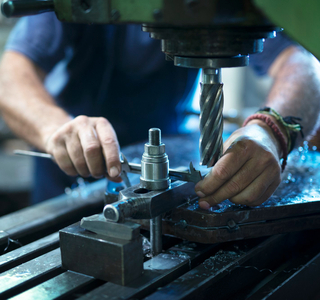
CNC (Computer Numerical Control) machining is a manufacturing process where computer-controlled machines remove material from a solid block to create the desired shape. The process relies on highly accurate programming and automated equipment to produce components with exceptional precision.
Modern CNC machining services are widely used for creating parts that require tight tolerances, smooth finishes, and consistent quality. Materials commonly used in CNC machining include aluminum, steel, brass, titanium, plastics, and various engineering materials. The process is particularly valuable for prototypes, custom parts, and components that require detailed features or complex geometries.
Understanding Casting
Casting is a manufacturing method that involves pouring molten metal or other materials into a mold cavity. Once the material cools and solidifies, the finished part is removed from the mold. Casting has been used for centuries and remains a popular choice for producing large quantities of parts. Various casting techniques exist, including sand casting, die casting, investment casting, and permanent mold casting. This method is commonly used to manufacture engine blocks, machinery components, decorative items, valves, pumps, and other large or complex products.
How CNC Machining and Casting Differ?
Although both processes produce finished components, their approaches are fundamentally different.
CNC machining starts with a solid piece of material and removes unwanted sections until the desired shape is achieved. Casting, on the other hand, begins with molten material that is shaped inside a mold. Because of this difference, each process offers distinct advantages and limitations in terms of cost, flexibility, and performance.
- Precision and Accuracy: One of the biggest advantages of CNC machining is its outstanding accuracy. Computer-controlled equipment can produce parts with extremely tight tolerances, often within a few microns. This level of precision is essential for industries where even minor dimensional variations can affect performance or safety. Aerospace components, medical devices, and high-performance automotive parts frequently rely on machining because of its ability to maintain exact specifications. Casting can also achieve good dimensional accuracy, particularly with advanced methods such as investment casting or die casting. However, slight variations can occur during cooling and solidification, making it less precise than machining in many applications. When precision is the top priority, CNC machining is generally the preferred choice.
- Material Flexibility: CNC machining supports a wide range of materials, allowing manufacturers to work with metals, plastics, composites, and specialty alloys. This flexibility makes it suitable for diverse industries and applications. Casting is primarily associated with metals, although some non-metal materials can also be cast. Certain alloys are easier to cast than machine, which can make casting advantageous for specific projects. The ability to select from numerous materials is one reason many businesses rely on CNC machining services when producing specialized or high-performance components.
- Production Volume Considerations: Production volume plays a major role when choosing between machining and casting. For low-volume production, prototypes, and custom components, CNC machining is often more economical because it eliminates the need for mold creation. Manufacturers can quickly modify designs and produce parts without significant tooling investments. Casting becomes more cost-effective when producing large quantities. Although mold development can be expensive initially, the cost per part decreases significantly as production volume increases. Businesses planning mass production often choose casting because the tooling investment can be spread across thousands of units.
- Surface Finish and Part Quality: CNC machining typically produces superior surface finishes directly from the machine. Depending on the tooling and machining parameters used, parts may require little or no additional finishing. Casting can create good surface finishes, especially with advanced casting methods. However, many cast parts require secondary operations such as grinding, polishing, machining, or surface treatment to meet final specifications. For applications where appearance and dimensional consistency are critical, machining often provides an advantage.
- Complexity of Design: Both manufacturing methods can handle complex geometries, but they achieve them differently. Casting excels at creating intricate internal cavities, hollow sections, and complex shapes that may be difficult or expensive to machine. By designing the mold appropriately, manufacturers can produce highly detailed parts in a single operation. CNC machining is ideal for producing complex external features, precise holes, slots, threads, and detailed contours. Modern multi-axis machines can manufacture sophisticated components with remarkable accuracy. The best choice often depends on the specific geometry and functionality of the part being produced.
- Lead Time and Production Speed: Speed is another important factor in manufacturing decisions. CNC machining generally offers faster turnaround times for prototypes and small production runs. Once the digital design is ready, production can begin immediately without waiting for molds or tooling. Casting typically requires additional preparation time for mold design, fabrication, and testing. While this can extend initial lead times, production becomes highly efficient once the molds are ready. Companies that need rapid product development often appreciate the CNC production advantages associated with shorter setup times and faster design modifications.
- Cost Comparison: Cost is often one of the most important considerations when selecting a manufacturing process. For small production quantities, CNC machining usually offers better value because it avoids the high upfront cost of mold creation. Design changes can also be implemented quickly without significant additional expenses. Casting requires tooling investment, which increases initial costs. However, as production volume increases, the per-unit manufacturing cost decreases significantly. Therefore:
- CNC machining is often more cost-effective for low-volume production.
- Casting is usually more economical for high-volume manufacturing.
The ideal choice depends on project scale, budget, and long-term production plans.
- Waste and Material Utilization: Material efficiency is becoming increasingly important in modern manufacturing. CNC machining is a subtractive process, meaning material is removed from a larger workpiece. While recycled chips can often be reused, some material waste is inevitable. Casting generally uses material more efficiently because molten metal is shaped directly into the desired form. Although runners, gates, and excess material may still require recycling, waste levels are often lower. Manufacturers seeking sustainable production solutions should evaluate material usage alongside other production factors.
- Maintenance and Design Changes: Product designs often evolve during development, requiring manufacturers to make adjustments. CNC machining offers exceptional flexibility for design modifications. Engineers can update digital files and begin producing revised parts with minimal delay. Casting is less flexible once molds have been created. Significant design changes may require mold modifications or entirely new tooling, increasing both costs and lead times. This adaptability represents one of the major CNC production advantages for companies developing new products or frequently updating designs.
Which Manufacturing Process Is Better?
There is no universal answer because the best process depends on the specific requirements of the project.
Choose CNC machining when:
- High precision is required.
- Production volumes are low to medium.
- Fast prototyping is important.
- Design changes are expected.
- Superior surface finish is needed.
Choose casting when:
- Large production volumes are planned.
- Complex internal geometries are required.
- Lower per-unit costs are important.
- Initial tooling investment is acceptable.
- Material efficiency is a priority.
Both CNC machining and casting are valuable manufacturing processes that serve different purposes. CNC machining stands out for its precision, flexibility, rapid turnaround, and ability to create highly accurate components. Casting, meanwhile, offers significant advantages for large-scale production, complex shapes, and lower unit costs at higher volumes.
The right choice depends on factors such as production quantity, budget, material requirements, design complexity, and performance expectations. By carefully evaluating these considerations, manufacturers can select the process that delivers the best balance of quality, efficiency, and cost for their specific application.